The Roundtable
Welcome to the Roundtable, a forum for incisive commentary and analysis
on cases and developments in law and the legal system.
on cases and developments in law and the legal system.
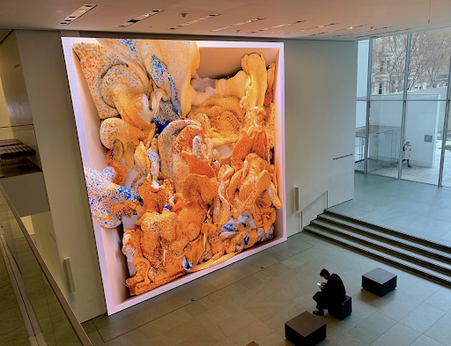 By Aaron Tsui Aaron Tsui is a sophomore studying computer engineering in the School of Engineering and Applied Science interested in technology law and intellectual property. OpenAI’s public release of ChatGPT in late 2022 marked a pivotal moment in the history of not only technology, but also society as a whole. Though artificial intelligence (AI) and generative AI have been prominent within the technology sector for decades prior, ChatGPT was the first interaction many people had with AI. Unsurprisingly, ChatGPT and other generative AI platforms, from OpenAI’s DALL-E and DALL-E 2 to Google’s Bard to Midjourney, have left many with incorrect and misguided notions about the “generative” aspect of generative AI. While many believe generative AI to be creating novel content, they have unfortunately overlooked the expanded form of the acronym GPT: “Generative Pre-trained Transformer.” As in the name, the “pre-trained” aspect refers to the fact that these AI models are trained with vast amounts of data before they are released for use. Hence, when a question is asked to ChatGPT, it does not obtain recently released information, nor does it use a search engine. Rather, it uses data that it was trained on to generate its response. Generative art programs such as Midjourney are no different in their approach, given that they are trained with vast amounts of images, which are then used to generate the prompted artwork.
This “pre-trained” aspect has caused much controversy in the legal system, stemming from the legal implications of using copyrighted images to train these models. Many questions have been raised regarding the extent to which the AI model’s use of copyrighted images classifies as infringement. Particularly, how does the technological specifics of how the training and generation is done affect what constitutes copyright infringement? And if there are no obvious or detectable areas of direct copying, can a copyright infringement lawsuit even have any legal standing? According to 17 U.S. Code § 501, for there to be a valid case of copyright infringement, the plaintiff must prove that they “ are the owner of a valid copyright; and the defendant copied original expression from the copyrighted work.”[1] While proving ownership of a valid copyright is fairly simple, proving that the defendant directly copied from the original work is far more difficult given that there needs to be shown, beyond any doubt, an exact one-to-one match within the work, and that the defendant accessed the original work. This challenge is exacerbated by the fact that the generation of AI-created artwork is done via an algorithm, in which the exact steps the model took to create the artwork and the particular decisions it made, are extremely difficult to retrace. In the recent Andersen v. Stability AI Ltd. case, for example, Andersen, an artist, claims that Stability AI had infringed on her, and others’, copyrighted artwork. Specifically, Andersen alleges that Stability AI, in its process of training the model, used over 5 billion copyright images. Yet, one key area of note is that Andersen has not identified any particular copyrighted image that belongs to them that Stability AI has used, making it far weaker for Andersen to allege copyright infringement.[2] Even further, Andersen acknowledges in their own claim that no output generated art is likely to be of conspicuous similarity to their copyrighted images used in the training data.[3] Given that Andersen themselves have admitted this, their uphill battle of crafting a solid copyright infringement case just seems to be getting steeper. If Stability AI is found to have indeed used copyrighted images in its training data, Stability would likely argue for fair use. The exact process of how training images are used and how the generated art is created brings attention to a crucial legal term: “transformative.” As stated in the U.S. Copyright Office Fair Use Index and Section 107 of the Copyright Act, the use of copyright-protected work falls under fair use if it is applied in, for example, the context of criticism, comment, news reporting, teaching, scholarship, and research. In the first factor used to evaluate fair use, the transformative nature of said use is evaluated to the extent in which the transformative work adds something new to, and does not substitute the use of the original work.[4] Thus, Stability AI, if arguing for fair use, is likely to claim and proceed to prove that any generated art is transformative enough to be considered fair use. The precedent Authors Guild, Inc. v. Google, Inc. is also likely to bolster Stability AI’s argument for use. In the process of creating a digitized search engine, Google incorporated the text of many copyrighted books. Google was then able to successfully defend itself, with the court finding that Google’s use was sufficiently transformative and did not harm the original market of the plaintiff’s books.[3] However, Andersen v. Stability AI Ltd is far from one-sided . The recently decided Supreme Court case Andy Warhol Foundation for the Visual Arts, Inc. v. Goldsmith found that Warhol did in fact infringe on Goldsmith’s copyrighted photo of the famous musician Prince. While the court did emphasize that it was not Warhol’s use and transformation of said photo that gave argument to infringement, but rather the foundation’s subsequent licensing of said artwork.[5] These cases emphasize the complexity of copyright and fair use, especially when it comes to evaluating the transformative nature of a derivative piece of artwork. For Andersen v. Stability AI Ltd., the decision could very well be dependent on the particular federal circuit and how the judge or court define what is sufficiently transformative, as well as how they interpret the methodology of training these generative AI models. For the question posed regarding the copyrighting of the AI generated artwork itself, its answer is just as ambiguous. Based on the fact that AI generated artwork lacks human authorship, a Washington D.C. federal judge decided that these artworks are not eligible for copyright protection. In that specific case, the copyright applicant admitted that they played no role in the creative process of generating the artwork.[6] In more complex cases, particularly those arguing that human authorship and creativity is involved in prompting the AI model and leading its creative direction, the decision is far less definitive. The current levels of ambiguity within the legal system are prominent, challenging long-standing copyright and intellectual property laws, as well as fair use codes. To add to that, the accelerating rise of technology, art, and the human creative process will only raise more questions than answers. References: [1 ]“17.5 Copyright Infringement-Elements-Ownership and Copying (17 U.S.C. § 501(a)-(b)).” 17.5 Copyright Infringement-Elements-Ownership and Copying (17 U.S.C. § 501(a)-(b)) | Model Jury Instructions, www.ce9.uscourts.gov/jury-instructions/node/261. [2] “I Can’t Get No Compensation: Ai Image Generators and Copyright.” Davis Wright Tremaine, www.dwt.com/insights/2023/02/ai-copyright-andersen-stability. [3] Generative AI Meets Copyright | Science, www.science.org/doi/10.1126/science.adi0656. [4] Office, U.S. Copyright. U.S. Copyright Office Fair Use Index, www.copyright.gov/fair-use/. [5] Karol, Peter J. “The Transformative IMPACT OF WARHOL V. Goldsmith.” The Online Edition of Artforum International Magazine, 5 June 2023, www.artforum.com/slant/the-transformative-impact-of-warhol-v-goldsmith-90667. [6] Setty, Riddhi, and Isaiah Poritz. “AI-Generated Art Lacks Copyright Protection, D.C. Court Says (1).” Bloomberg Law, 18 Aug. 2023, news.bloomberglaw.com/ip-law/ai-generated-art-lacks-copyright-protection-d-c-court-rules. The opinions and views expressed in this publication are the opinions of the designated authors and do not reflect the opinions or views of the Penn Undergraduate Law Journal, our staff, or our clients.
0 Comments
Your comment will be posted after it is approved.
Leave a Reply. |

|

|