The Roundtable
Welcome to the Roundtable, a forum for incisive commentary and analysis
on cases and developments in law and the legal system.
on cases and developments in law and the legal system.
 By Aaron Tsui
Aaron Tsui is a sophomore studying computer engineering in the School of Engineering and Applied Science interested in technology law and intellectual property. OpenAI’s public release of ChatGPT in late 2022 marked a pivotal moment in the history of not only technology, but also society as a whole. Though artificial intelligence (AI) and generative AI have been prominent within the technology sector for decades prior, ChatGPT was the first interaction many people had with AI.
0 Comments
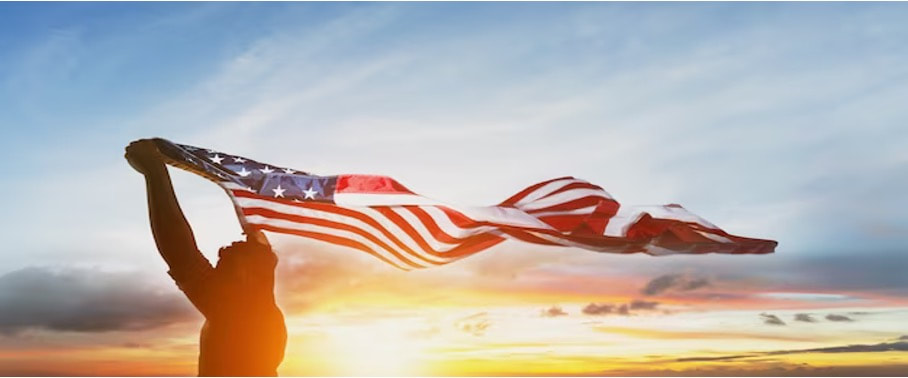 By Catherine Tang Catherine Tang is a freshman at the University of Pennsylvania majoring in Health and Societies with a concentration in Health Policy & Law. To no one’s surprise, the US is leading the world in terms of incarceration rates with 1 in 4 of the world’s inmates in a US prison or jail. [1] A less commonly discussed statistic, however, is how 107,400 of the incarcerated population are veterans, and there are currently more veterans behind bars in the US than there are total prisoners in all but 14 other countries. [2] In fact, one-third of veterans self-report having been arrested at least once compared to fewer than one-fifth of civilians, [3] and nearly twice as many veterans as non-veterans are serving life sentences. [4] However, many of these incarcerated veterans were sentenced without their service-related Post Traumatic Stress Disorder (PTSD) or Traumatic Brain Injury (TBI) taken into account.
 By Amanda Damayanti
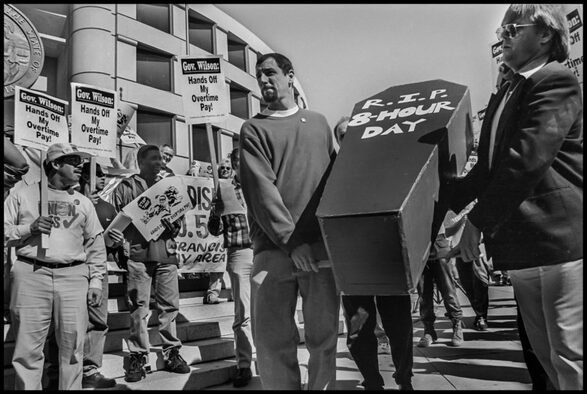
Amanda Damayanti is an exchange student from Indonesia at the University of Pennsylvania. She is currently pursuing a law degree in the Faculty of Law at the University of Indonesia. In July 2023, the Royal Assent for its Employment Relation (Flexible Working) Act 2023 was passed in the United Kingdom. [1] The relatively new law gives employees more power to control their working hours. [2] Employees have more flexible start and finish work times and more leniency concerning working from home. Additionally, the new bill increased the number of requests employees can file for the flexible working hour, which employers can’t deny without first discussing with the employee. [3] In contrast to the United Kingdom, the United States of America is the most overworked developed country in the world. [4] The country is still lagging behind other developed countries in terms of working hours, overwork pay, paternal leave, and wages. [5] There is a trend showing that the richer the nation is, the fewer the employee working hours will be, and the more freetime they will have. [6] In 2023, the United States itself experienced strong economic growth because of its increase in Gross Domestic Product (GDP) and decrease in inflation. [7] The United States has the largest GDP in the world with an annual rate of 4.9 percent in the third quarter of 2023. [8] Despite this, the reality is that employees in the United States work more hours compared to those in Germany, the United Kingdom, Norway, and Japan. [9] This begs the question: does the United State’s increase in economic wealth trickle down to its employees? 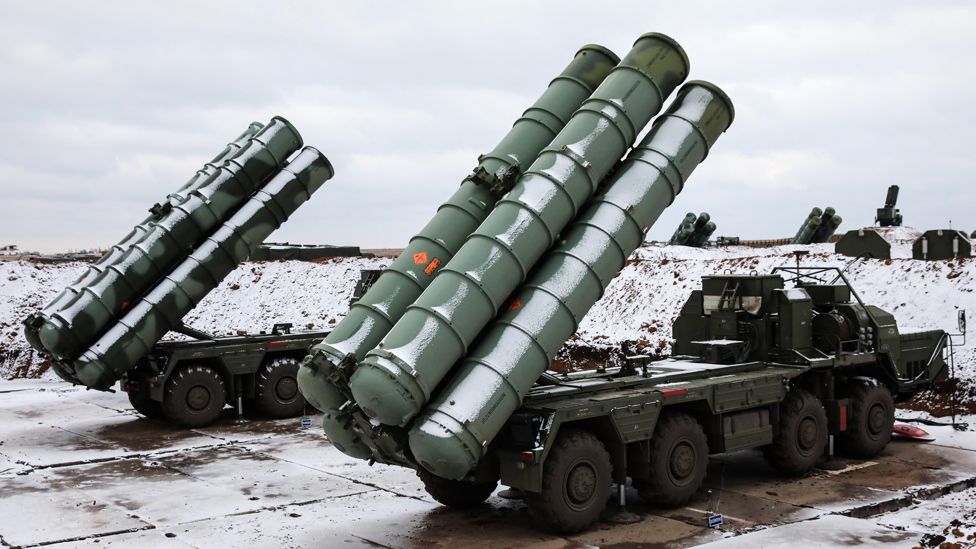 By Pratama Tambunan
Pratama is currently an exchange student at the University of Pennsylvania. Before coming to Penn, he was a senior at the Faculty of Law at Universitas Gadjah Mada, Indonesia. There has long been an understanding in international relations that an attack against another state (or legally termed as ‘use of force’), is to some extent plausible in international law—provided that it is masked under the traditional doctrine of self-defense. Article 2(4) of the United Nations Charter (“UN Charter”) expressly states that “All Members shall refrain in their international relations from the threat or use of force against the territorial integrity or political independence of any state, or in any other manner inconsistent with the Purposes of the United Nations.” One then could imply that a textual interpretation of the UN Charter, based on the ordinary meaning of the term, suggests that force can be permitted if it is consistent with the Purposes of the UN. Just rightly so, as clarified in the 2003 Oil Platforms Case, which addressed the lawfulness of the United State’s attack against certain oil platforms in Iran after the 2003 Iranian attacks against the United State’s consulate, the International Court of Justice (“the Court”) clarified that the one justification for a State’s use of force is self defense. The court pointed towards the existing right of self-defense ingrained under Article 51 of the UN Charter which states, “Nothing in the present Charter shall impair the inherent right of individual or collective self-defense if an armed attack occurs against a Member of the United Nations, until the Security Council has taken measures necessary to maintain international peace and security.” This is not a contested issue in international law. 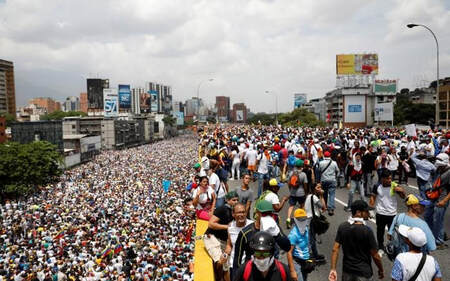 By Lyan Casamalhuapa
Lyan Casamalhuapa is a sophomore in the College of Arts and Sciences studying Political Science. The U.S. Treasury Department has recently authorized Venezuela, an OPEC member, to produce and export oil for the next six months without limitations. This move comes after a deal reached in Venezuela to begin lifting bans that kept opposition candidates from running in elections next year - a general step towards free and fair elections. When taking a look inside Venezuela’s contradictory oil industry, Venezuela has more proven oil reserves than any other country in the world. They have led globally with over 304 billion barrels of proved reserves, surpassing the U.S’ 69 billion barrels. Given the immense oil reserves at its disposal, Venezuela should have a bolstering and prosperous economy; however, instead, the Venezuelan economy has been marked by hyperinflation, leading to escalating hunger, disease, and one of the largest external displacement crises in the world. This can be accredited to the country's main exportation, oil, plummeting by more than 75% over the past decade. [1] Thus, the question arises: how does a country with so much oil produce so little?  By Nathan Liu
Nathan Liu is a freshman studying political science in the College of Arts and Sciences. “In Mojave thinking, body and land are the same. The words are separated only by the letters ‘ii and ‘a: ‘iimat for body, ‘amat for land. In conversation, we often use a shortened form for each: mat-. Unless you know the context of a conversation, you might not know if we are speaking about our body or our land. You might not know which has been injured, which is remembering, which is alive, which was dreamed, which needs care. You might not know we mean both” - Natalie Diaz.[1] 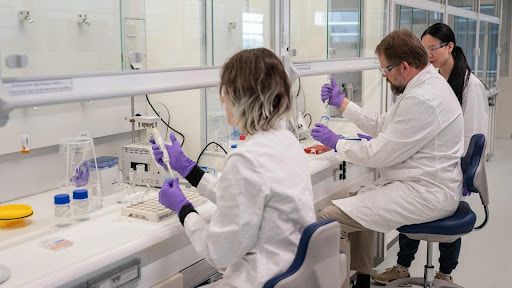 By Amanda Damayanti
Amanda Vania Damayanti is an exchange student from Indonesia at the University of Pennsylvania. She is currently pursuing a law degree in the Faculty of Law at the University of Indonesia. A patent is an exclusive right, granted for the invention of a product or a process which allows a new or an alternative way to solve a problem. In the healthcare industry, patents are provided to novel pharmaceutical medicine or medical devices. The exclusive right of the patent allows the patent holder to exclude others in making, using, and/or selling their patented product. [1] In order to get a patent for a new medicine or medical device to be sold in the market, one must register through the United States Patent and Trademark Office (USPTO) and then get the FDA’s (Food and Drug Administration) approval. Foreign agents laws: How a WWII-era U.S. law is taking on new forms domestically and abroad5/20/2023  By Ella Sohn
Ella Sohn is a rising sophomore studying English in the College of Arts & Sciences. In early March, thousands of demonstrators took to the streets of Tbilisi, the capital city of Georgia, to protest a proposed law on “transparency and foreign influence.” The turmoil lasted two nights, leading to clashes with riot police and the detainment of over 100 protesters. The government said on Mar. 9 that it would withdraw the legislation. Although the protests calmed soon after the announcement, they highlighted a contentious type of legislation that several other countries have successfully implemented over the past decade. [1] 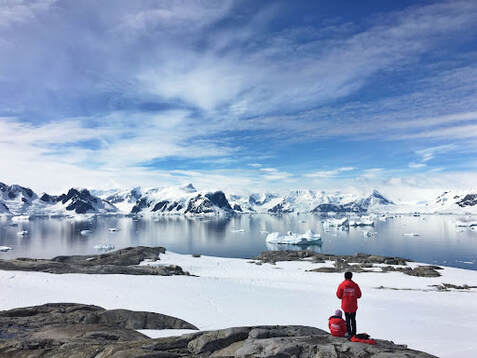 Serena Camici is a sophomore at the University of Pennsylvania studying International Relations.
Far from being just an icy tourist destination, the Arctic Circle is ripe ground for renewed geopolitical conflict. After the Cold War it has remained a relatively quiet region – until now. With its strategic position and treasure-trove of natural resources, the Arctic is an increasingly important place of interest for several state actors. [1] The current international order governing the Arctic will need to accommodate economic and political competition, heightened military activity, and climate change that will occur in the Arctic region over the next half of the 21st century. 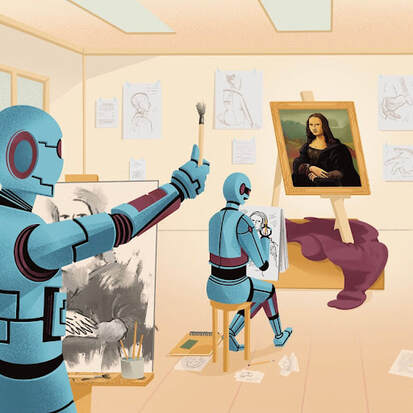 By Gabrielle Cohen
Gaby Cohen is a second-year student at the University of Pennsylvania’s College of Arts and Sciences studying philosophy, politics and economics. ChatGPT has generated intellectual property and copyright controversies and ignited debate among students, teachers, writers, artists, content creators, and employees of every kind. Released in November 2022, ChatGPT is an artificial intelligence chatbot powered by a large language model, which prompts it to perceive human language, evaluate and sort through immense collections of data, and produce replies [1]. The chatbot was developed by OpenAI, a startup based in San Francisco funded by prominent investors such as Elon Musk, Sam Altman, and Microsoft. ChatGPT consists of generative AI, using algorithms to generate, summarize, and alter data [ |

|

|