The Roundtable
Welcome to the Roundtable, a forum for incisive commentary and analysis
on cases and developments in law and the legal system.
on cases and developments in law and the legal system.
 By Tanner Bowen
Tanner Bowen is a rising sophomore at the University of Pennsylvania studying business. With the 2014 ruling in Burwell v. Hobby Lobby Stores, Inc. still fresh in the minds of employees across the United States, many women nervously approached what might become of their access to preventive care available under the Affordable Care Act if they worked for a religious employer. Although the Supreme Court ruled that for-profit corporations could not be required to pay for insurance coverage of contraception, this ruling created larger implications involving the extent that religious entities can object to the mandate itself. [1] Throughout the last term, at least two Courts of Appeals have tackled a new issue: whether a religious non-profit is substantially burdened under the Religious Freedom Restoration Act (RFRA) by having to notify the Department of Health and Human Services (HHS) or its insurance provider/third-party administrator (TPA) that they object to providing contraceptive care to their employees. To give a little more context to the circumstances of this case, one must first go back to the 1990s. For decades, the Supreme Court had used a balancing test for Free Exercise Claims by stating that the government must have a “compelling interest” to impose burdens on religion as well as “no alternative forms of regulation.” [2] This changed in 1990 when the Supreme Court upheld a ban on peyote in the case Employment Division v. Smith, stating that generally applicable laws can burden religions but not violate the First Amendment. This is when Congress stepped in and in 1993, passed the RFRA to restore pre-Smith analyses [3].
0 Comments
 By Tanner Bowen
Tanner Bowen is a rising sophomore at the University of Pennsylvania studying business. Chocolate has essentially become a staple food of Western culture. With the world’s sweet tooth steadily rising, pressure has been placed upon chocolate producers to cut costs and increase supply. Efforts to keep up with this exponentially increasing industry have given rise to allegations of child slavery throughout the cocoa industry in countries such as the Ivory Coast and Ghana where over 70% of the world’s cocoa is produced. [1] Fortunately, former child laborers have not kept quiet. Three former victims of child slavery filed a lawsuit in 2013 under the Alien Tort Statute (ATS) protesting their treatment. The ATS states that, “The district courts shall have original jurisdiction of any civil action by an alien for a tort only, committed in violation of the law of nations or a treaty of the United States.” [2] Formed approximately twenty years after the founding of the United States, this law has been rarely utilized until recently. Now, numerous foreign citizens are using this statue against American corporations for aiding in crimes against humanity conducted overseas. Employing the power of the ATS, the plaintiffs alleged that chocolate giants Nestlé and Cargill Incorporated were guilty of abetting and promoting child slavery in the Ivory Coast by doing business with farmers who enslaved numerous children. [3] They brought the case John Doe v. Nestle USA, Inc. (2013) to the Ninth Circuit Court of Appeals. [4]  By Tanner Bowen
Tanner Bowen is a freshman at the University of Pennsylvania studying business. The First Amendment is often cited as one of the most controversial yet most sacredly guarded rights of the United States Constitution. Even today, after numerous cases of litigation that have redefined our understanding of this fundamental right, the government’s ability to possibly restrict it is still hotly debated, as the Seattle Midwest Awareness Campaign (SeaMAC) discovered. SeaMAC is a non-profit organization based in Washington State that is opposed to US support of Israel. In late 2010, SeaMAC applied for an advertisement spot on the Metro City Buses in Seattle for four weeks. The ad simply stated: “ISRAELI WAR CRIMES/YOUR TAX DOLLARS AT WORK/www.Stop30Billion-Seattle.org.” Although this ad was unequivocally controversial, it did not initially violate any of the Metro’s restrictions against profanity or any other defamatory or inappropriate content. Thus, King County approved the ad and intended to let it run until a local television broadcast picked up the story. 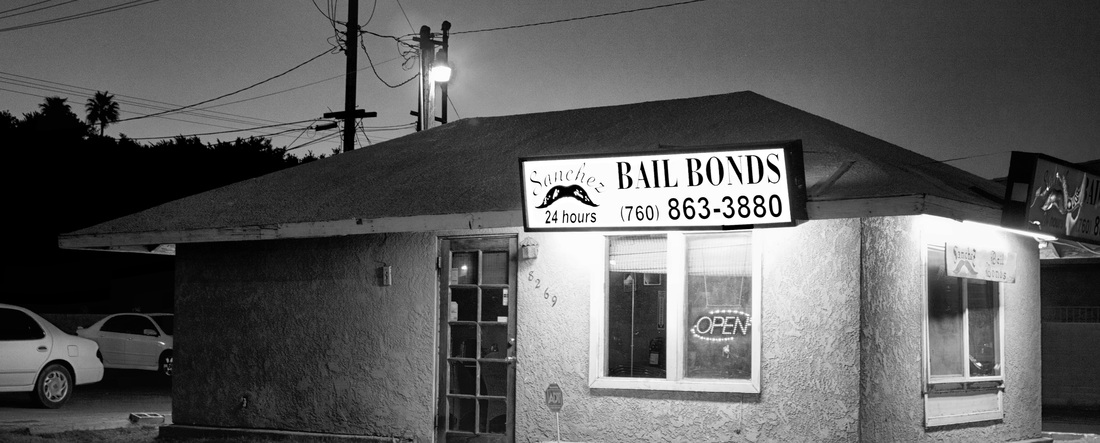
By Tanner Bowen
Tanner Bowen is a freshman at the University of Pennsylvania. It is often an understatement that Arizona is America’s most recent and continual “Laboratory of Democracy.” As wittily opined by Justice Louis Brandeis, a “Laboratory of Democracy” is used to describe how a “state may, if citizens choose, serve as a laboratory; and try novel social and economic experiments without risk to the rest of the country.” [1] The Ninth Circuit Court of Appeals has often struck down these laws. Over the summer, it ruled Arizona’s law refusing recipients of Deferred Action for Childhood Arrivals (DACA)--the Obama administration’s policy of allowing immigrants who entered the country while they were young to receive an exemption from deportation-- from obtaining drivers licenses was unconstitutional. [2] The Ninth Circuit has spoken again, and this time they ruled that the infamous Proposition 100 was a violation of the Due Process Clause of the Fourteenth Amendment. [3] The Lopez-Valenzuela v. Arpaio (2014) case originated after voters in the State of Arizona provided an overwhelming approval for an amendment to the state constitution that would deny immigrants illegally residing in the United States bail if they had previously committed “serious felon[ies]” and if the “proof is evident” to present charges. [4] Plaintiffs Angel Lopez-Valenzuela and Isaac Castro-Armenta sued the state of Arizona after they were charged with state crimes and held in the Maricopa County Jail without the possibility of bail, declaring that this law was not only a violation of the Fourteenth Amendment, but also breaches of the Excessive Bail Clause of the Eighth Amendment and the Supremacy Clause.  By Tanner Bowen
Tanner Bowen is a freshman at the University of Pennsylvania. Bob Marley has become one of the most influential figures in modern pop culture, as well as a notoriously cited musical influence ever since his death over three decades ago. However, since his death, numerous attempts to falsely endorse his famous image upon t-shirts and other merchandise found at large retailers such as K-Mart, Wal-Mart, and J.C. Penney have arisen. Hope Road, an entity made up of Marley’s descendants, once again took up this battle in an attempt to stop the dispersal of Marley’s image and recuperate lost revenue from such actions. In Fifty-Six Hope Road Music v. A.V.E.L.A., Hope Road sued A.V.E.L.A., Inc., X One X Movie Archive, Inc., and other defendants for acquiring photographs of Bob Marley in 2004. The Ninth Circuit Court of Appeals recently ruled that A.V.E.L.A. and other defendants were guilty of knowingly using Bob Marley’s image on their merchandise as well as falsely endorsing it to other customers in Nevada. In addition, Hope Road was entitled to the net profits generated by all of the defendant entities from the merchandise sold which had Marley’s image illegally placed upon it and finally reimbursement for attorney fees. 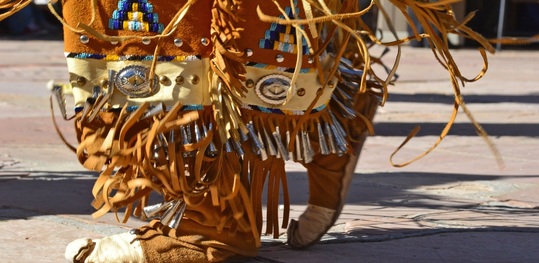
By Tanner Bowen
Tanner Bowen is a freshman at the University of Pennsylvania. The United States Court of Appeals for the Ninth Circuit recently ruled that Native Americans were not protected under Title VII of the Civil Rights Act of 1964 from hiring discrimination by employers of different Native American lineages; whether a Native American is Navajo or Hopi is considered a political classification rather than a claim of national origin discrimination. The case EEOC v. Peabody Western Coal Co. arose after two members of the Hopi tribe and one member of the Otoe tribe of Arizona sought employment with Peabody Western Coal Company, a Navajo owned coal mine. The mine refused to hire them and opted to hire more fellow Navajo tribe members instead. The Equal Employment Opportunity Commission (EEOC) had sued Peabody over a series of four lawsuits pertaining to these discriminatory practices. This last round of lawsuits commenced after the district court had granted summary judgment on behalf of Peabody Coal. In response to this action, the EEOC appealed the decision to the Ninth Circuit. 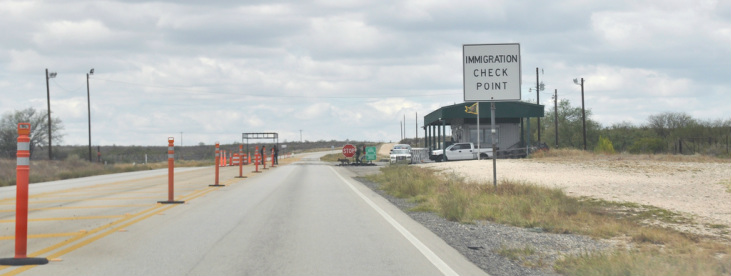
By Tanner Bowen
Tanner Bowen is a rising freshman at University of Pennsylvania. “I will not stand idly by while our citizens are under assault and little children from Central America are detained in squalor. We are too good of a country,” said Texas Governor Rick Perry. Governor Perry's comments reflect just one of the recent actions taken by leaders of border states to combat the immigration problems that have divided the United States for the last few centuries. [1] This desire to deport illegal immigrants in the U.S. is not unprecedented. After former Secretary of Homeland Security Janet Napolitano enacted the Deferred Action for Childhood Arrivals (DACA) initiative on August 15, 2012, Arizona Governor Jan Brewer signed an executive order on the same day that prevented these DACA recipients from becoming eligible for state identification. This case applied particularly to the issuance of drivers licenses. 
By Tanner Bowen
Tanner Bowen is a rising freshman at University of Pennsylvania. The issue of mental health in the legal system is one that has recently been brought back into the spotlight. While the overarching question of how to deal with the mentally impaired still looms over us, courts have recently begun to rule on a smaller aspect of the issue: whether the government can involuntarily administer medication to defendants declared incompetent. The U.S. Court of Appeals for the Seventh Circuit recently heard the case United States v Breedlove, where a man named Norman Breedlove was indicted for heroin trafficking and felony firearm possession. After a plea deal was negotiated, Breedlove filed a “Notice of Ineffective Counsel”, believing that his counsel was trying to conspire against him. This led to a psychological evaluation where Breedlove was found to suffer from paranoid schizophrenia, his delusions preventing him from standing trial. This is when the U.S. Government requested Breedlove be involuntarily put on antipsychotics. [1] |

|

|