The Roundtable
Welcome to the Roundtable, a forum for incisive commentary and analysis
on cases and developments in law and the legal system.
on cases and developments in law and the legal system.

 By Frank Geng
Frank Geng is a freshman at the University of Pennsylvania and an associate editor of the Penn Undergraduate Law Journal. It seems these days that we might be hard-pressed to find an issue that both Democrats and Republicans could agree on—let alone agree to co-pilot legislation. That will be the case, however, in the coming weeks as a group of three Republicans, two Democrats, and one independent prepare to introduce a piece of legislation that would reexamine the rule-making process of Wall Street regulators. Ostensibly to bring financial regulation standards more in line with the executive branch, the law will most likely create more obstacles to the already lengthy process enacting Wall Street oversight. “Reform is badly needed,” Massachusetts Senator Elizabeth Warren noted, “but this package heads in the wrong direction, giving lobbyists and lawyers more chances to block outcomes they don’t like.” [1] On a broader conceptual level, it comes down to the fundamental differences in how we view the economic consequences of regulation. But on a more mechanical level, this regulatory package seems to be a simple helping-hand to the candidates’ biggest backers. On the specifics of the legislation, it would seem that many of the legislation’s components create unnecessary extra steps in the rulemaking process. The central theme of the bill is to mandate serious cost-benefit analyses (CBAs) to any new regulatory moves. One of the provisions, for example, would require the Congressional Budget Office (CBO) to perform these CBA reviews. [2] Coincidentally, the CBO has never dealt specifically with this type of analysis or task and as such, would stand to further delay the process without any particular value-added. Another core distraction of the legislation is the provision that suggests the creation of a new commission of appointed politicians to suggest regulatory modifications or repeals. [3] The preliminary logic would suggest that it’s simply a concern regarding any regulations that currently exist. This is not to say, however, that this process does not already exist nor does it mandate the creation of an independent panel to subvert regulatory independence in these financial watchdogs. The Dodd-Frank Act, for example, was primarily an attempt to reexamine and modify rules enacted before the financial crisis.
0 Comments
 By Sanjay Dureseti
Sanjay Dureseti is a freshman at the University of Pennsylvania and an associate editor of the Penn Undergraduate Law Journal. On November 20th, 2014, President Barack Obama announced his enactment of executive orders meant to drastically overhaul the immigration system of the United States. In circumventing the legislative authority of the Republican-controlled Congress, Obama expanded a 2012 program known as Deferred Action for Childhood Arrivals (DACA), which will now allow over 1.2 million young undocumented immigrants to apply for deportation deferrals and work permits. [1] An additional 4 million undocumented residents, of all age groups, will also be eligible for work authorization and federal authorities will shift the focus of deportation to undocumented felons. Congress unsurprisingly balked at the President’s decisions, with the majority party threatening both political and legal retribution. Along with declaring Obama’s actions a “brazen power grab,” Republican lawmakers declared the President’s overhaul as unconstitutional and as an imperial overstep of executive power. Over a year later, Congress has made good on its promise to challenge the President on legal ground. The Supreme Court recently announced that it would address his executive actions and rule on their legality in their upcoming judicial term. [2]  By Derek Willie
Derek Willie is a freshman at the University of Pennsylvania. If there was one emotion that Adam McKay’s film The Big Short was designed to evoke in its viewers, it was anger. What could be more detestable than a gang of greedy bankers tricking Mom and Pop into taking out a faulty mortgage and subsequently profiting on their default? The viewer further ponders how our government could watch such avarice bring down the entire U.S. economy and pursue so little punishment and such meager reform. Despite the indignation we feel as consumers touched by the crisis, it remains our responsibility to consider it carefully, unbeholden to the collective allure of Margot Robbie, Ryan Gosling and Brad Pitt. So before we run to pillage the nearest bank, let’s examine the central question the film attempts to answer: how did the Great Recession come to be?  By Dan Spinelli
Dan Spinelli is a sophomore at the University of Pennsylvania studying English and Political Science. It’s strange, undemocratic, and every four years, it’s first. Why, many casual political observers ask, has the Iowa caucus become a staple of the American presidential election cycle? With all respect to Iowans, what makes their state special enough to merit nonstop national media attention, county-by-county visits by the candidates, and an undeniable ability to boost candidates to unlikely success, from Jimmy Carter in 1976 to Barack Obama thirty-two-years later? At least the Electoral College, the other antiquated American voting institution, is rooted in the Constitution. Where did the Iowa caucus system come from? To answer that question we must look back to the 1968 Democratic National Convention, when the presidential nomination system became radically democratized. Since the emergence of the two modern major political parties in the mid-19th century, party bosses generally commandeered the primary process to select their preferred nominee. Pressure during the Progressive Era encouraged some parties to open up their delegate selection to voters through state primaries, but even this process failed to stop Democrat Adlai Stevenson from earning his party’s nomination in 1952 despite not participating in a single primary. At the contentious 1968 convention, the Party selected Vice President Hubert Humphrey, who was in support of continuing the Vietnam War, as the nominee despite nearly two-thirds of party members voicing support for antiwar candidates Sen. Eugene McCarthy and Robert F. Kennedy, who had been assassinated a month before the convention. Regulations adopted after the convention resulted in the nationalization of state primaries to select delegates to the convention. A process once decided by party bigwigs at closed-door meetings now incorporated the party membership at large, but the rules still had problems. States were permitted to craft their own nomination procedures and most states, like New Hampshire, just reinstituted their primaries and enfranchised normal party members. Iowa opted for something different.  By Steven Jacobson
Steven Jacobson is a sophomore at the University of Pennsylvania studying business and history. Amidst demonstrations across the country by cabbies, truckers and air traffic controllers last week, French farmers took to the streets to protest plummeting milk and livestock prices that have been falling since early 2014. Farmers blocked roads around La Rochelle with tractors and burning tires, demanding a meeting with French Prime Minister Manuel Valls. Didier Lucas, a pig farmer and chair of the local chapter of the FDSEA, a farmers’ union, told France Info that he felt the protests were “the only way for farmers to get their voices heard,” adding that they felt the government “despised” them. These hard feelings have come despite €600 million in emergency aid that the French government extended in response to similar protests this summer and a further €290 million announced on January 26. [1] [2] The farmers have countered that these measures fail to mitigate the underlying crisis. Milk prices have dropped 17 percent and beef prices 3.5 percent in the past two years. [3] Ten percent of French farms—about 22,000 sites—are on the verge of bankruptcy, with a combined debt of €1 billion. [4] Prices have fallen so low that many farmers produce unprofitably. Jean-Michel Juhel, a pig farmer from France’s Brittany region, loses €30 on each pig he sells.  By Luis Bravo
Luis Bravo is a freshman at the University of Pennsylvania In 2008, California became the first state to deprive citizens of their rights by rewriting its constitution through the passage of the infamous, Proposition 8. [1] Amongst heavy opposition, this amendment limited the recognition of marriage to unions between a man and a woman, dissolving the previously instituted marriage rights of same-sex couples. Its ratification is largely attributed to The Church of Latter-Day Saints which heavily funded a series of successful media campaigns under the guise of the nonprofit, the National Organization For Marriage. [2] This funding was subsequently utilized to produce propaganda in various formats to sway public opinion. Under federal regulations, however, nonprofit organizations are prohibited from participating in political activities or risk losing their tax-exempt status. [3] Nevertheless, due to the Citizens United decision in conjunction with ambiguous tax codes, these practices are deemed permissible, granting nonprofits an unrestrained ability to affect American politics. In order to have a truly just nation, one that embodies the democratic ideals we strive to uphold, it is essential that we reevaluate existing policies and instate stricter provisions to limit the power of nonprofit interest groups. As their name implies, nonprofit groups are organizations that redistribute any economic revenue for the sole purpose of aiding the lives of others. The United States’ Internal Revenue Services recognizes the merit of such organizations and awards them a tax-exempt status as outlined in section 501(c) of the IRS tax code. [4] In other words, these groups operate as if they had no income. While there are many types of nonprofits, most fall under the category of 501(c)(3) which are groups with charitable, educational, religious, or scientific purposes, among others. Meant to be isolated from political issues, donations to these groups qualify as tax deductions in individual income tax reports for the donors. Similarly, most other nonprofits fall under section 501(c)(4), which are groups meant to operate exclusively for the general welfare, but have become increasingly active in political campaigns. Because these groups are allowed minimal political involvement, donors do not qualify for tax deductions, but nonprofits are still not taxed for any of the money they receive. Several nonprofits have circumvented this by creating two distinct groups, one a 501(c)(3) and the other a 501(c)(4). In this way, money can be easily transferred between both organizations, and can be used for political purposes; in addition, donors will always qualify for tax deduction. This loophole is vital because both types of nonprofits are not subject to disclosure laws. While groups in the 501(c)(4) category are allowed greater political freedoms, it is important to recognize that neither group is legally able to support or endorse any partisan candidate or action. [5] 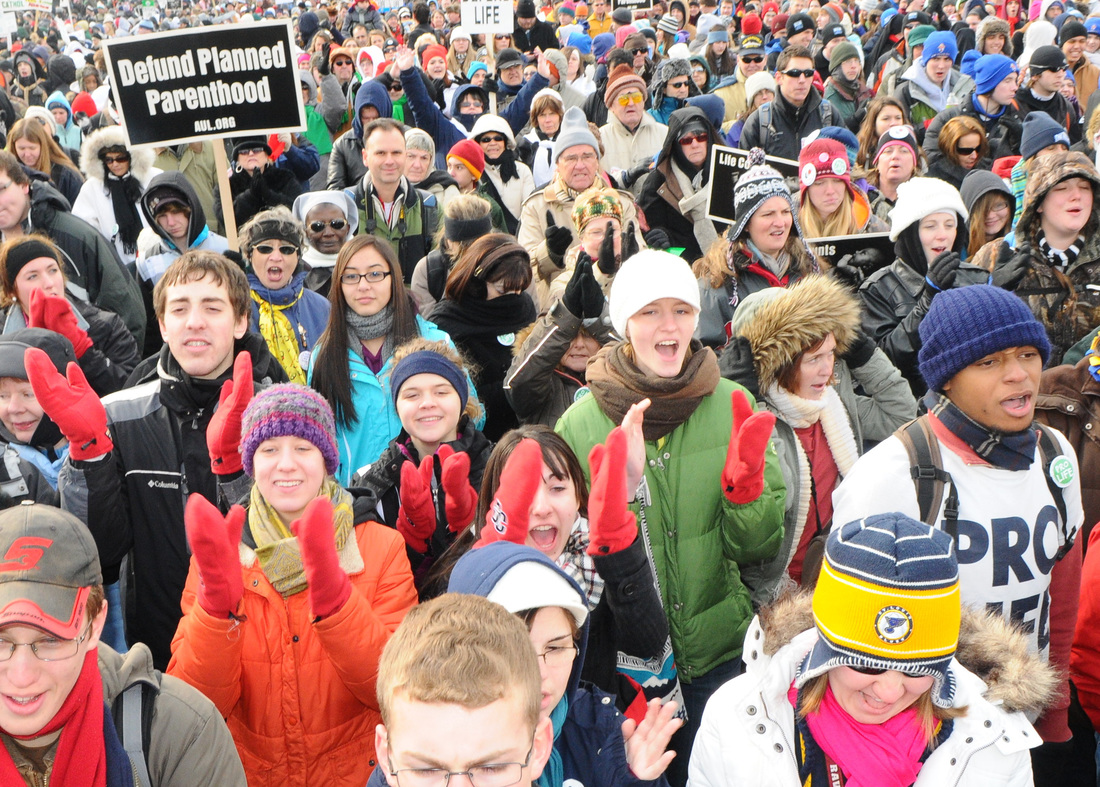 By Regina Salmons
Regina Salmons is a sophomore at the University of Pennsylvania studying English. The ongoing debate over abortion has extended beyond hypothetical arguments into the real world. In McCullen v. Coakley, Eleanor McCullen and other pro-life protestors and self-proclaimed “counselors” petitioned against Attorney General Martha Coakley for the infringement of what they believed to be their First and Fourteenth Amendment rights. [1] The petitioners argued that the required 35-foot buffer zones around women’s health clinics and abortion clinics designed to exclude these protestors infringed too heavily on their ability to provide “sidewalk counseling” to those entering the clinics. Additionally, they argued that “clinic escorts,” whose job it is to accompany patients seeking medical help through the buffer zones into the clinics, also prevented their right to free expression. Both the District Court and the First Circuit denied that the Act requiring the zones violated the First and Fourteenth Amendments. The Supreme Court, meanwhile, ruled that the law did in fact violate the First Amendment because it limited free speech too broadly, as the sidewalks leading to the clinics are indeed public ground. Historically, politicians often used such sidewalks as platforms for free speech and campaigning, yet those forms of campaign were not usually violent or inflammatory. On the other hand, these protestors often block the entrances to the clinic, not allowing those seeking reproductive health services to enter the building. The response of the Court was that in those circumstances, which appeared to only occur on Saturdays, police officers could be called to disperse the crowds. 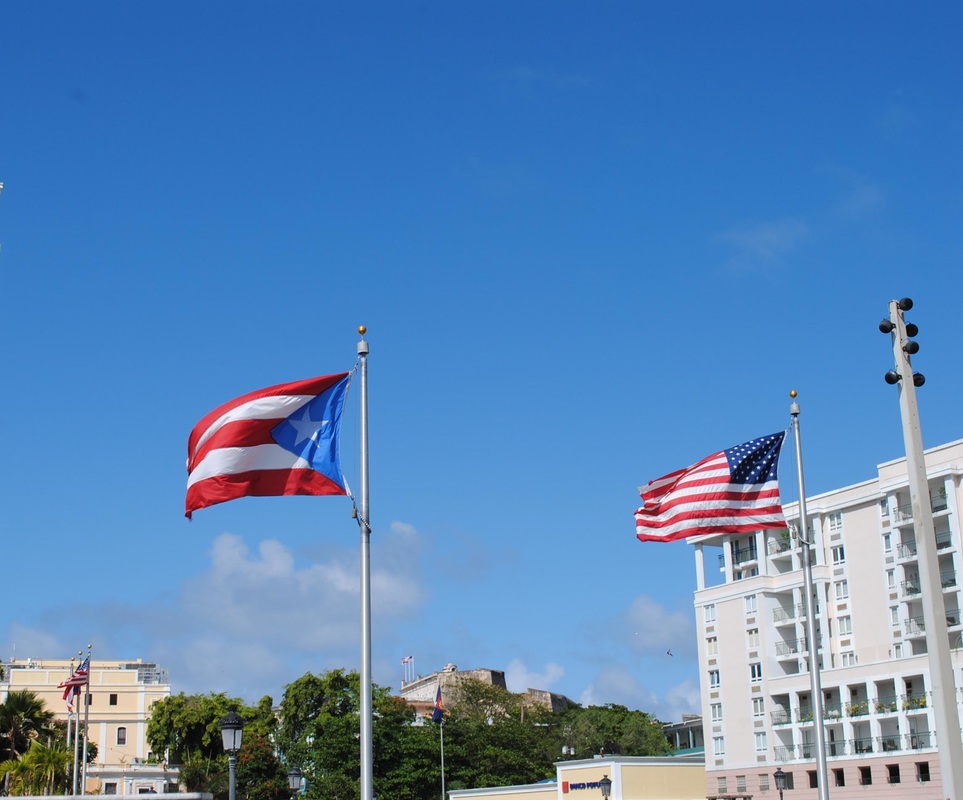 By Alicia Kysar
Alicia Kysar is a senior at Columbia University studying English and Political Science with a concentration in Pre-Law. As an unincorporated American territory, Puerto Rico has long had a complex and unique history with the United States. [1] While its citizens are granted statutory U.S. citizenship, and while the Puerto Rican currency is the U.S. dollar, Puerto Rico does not have the right to vote in Congress, and Puerto Rican-American citizens residing in Puerto Rico cannot vote in federal elections. In 2012, a referendum occurred in order to determine the nature of relationship with the United States Puerto Ricans desired in the coming years. Fifty-four percent of participants voted against their country remaining an unincorporated territory with limited American rights. Furthermore, sixty-one percent of voters opted for Puerto Rico to join the United States as the 51st state and enjoy the full rights of American citizenship. [2] Despite the wishes of the Puerto Rican people, however, there has been little to no action taken by the U.S. in recent years to incorporate further incorporate Puerto Rico into the United States. Two cases currently facing the Supreme Court, however, are poised to compel the US to take a more definite stand regarding Puerto Rico’s sovereignty.  By Tanner Bowen
Tanner Bowen is a sophomore at the University of Pennsylvania studying business. “It is clear that the courts of this country recognize a general right to inspect and copy public records and documents, including judicial records and documents.” [1] In cases involving sealed and unsealed documents, the Supreme Court has developed a policy in which access to court records should be strongly favored. Although parties do enter into agreements to seal documents after a district court trial, the party that moves to seal the records thus has a strong burden of proof to show that there is a “compelling reason” to keep access to these records at a minimum. |

|

|